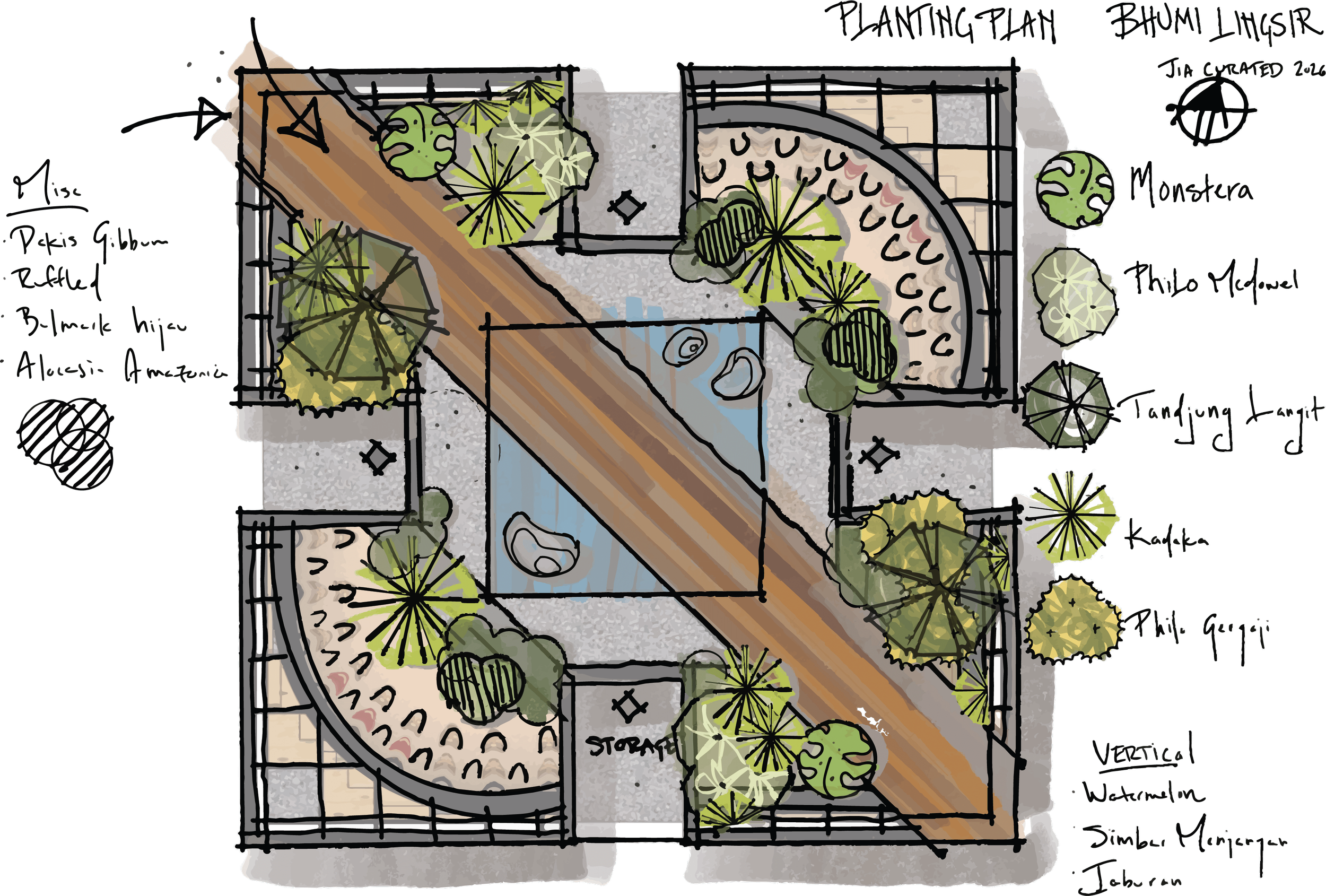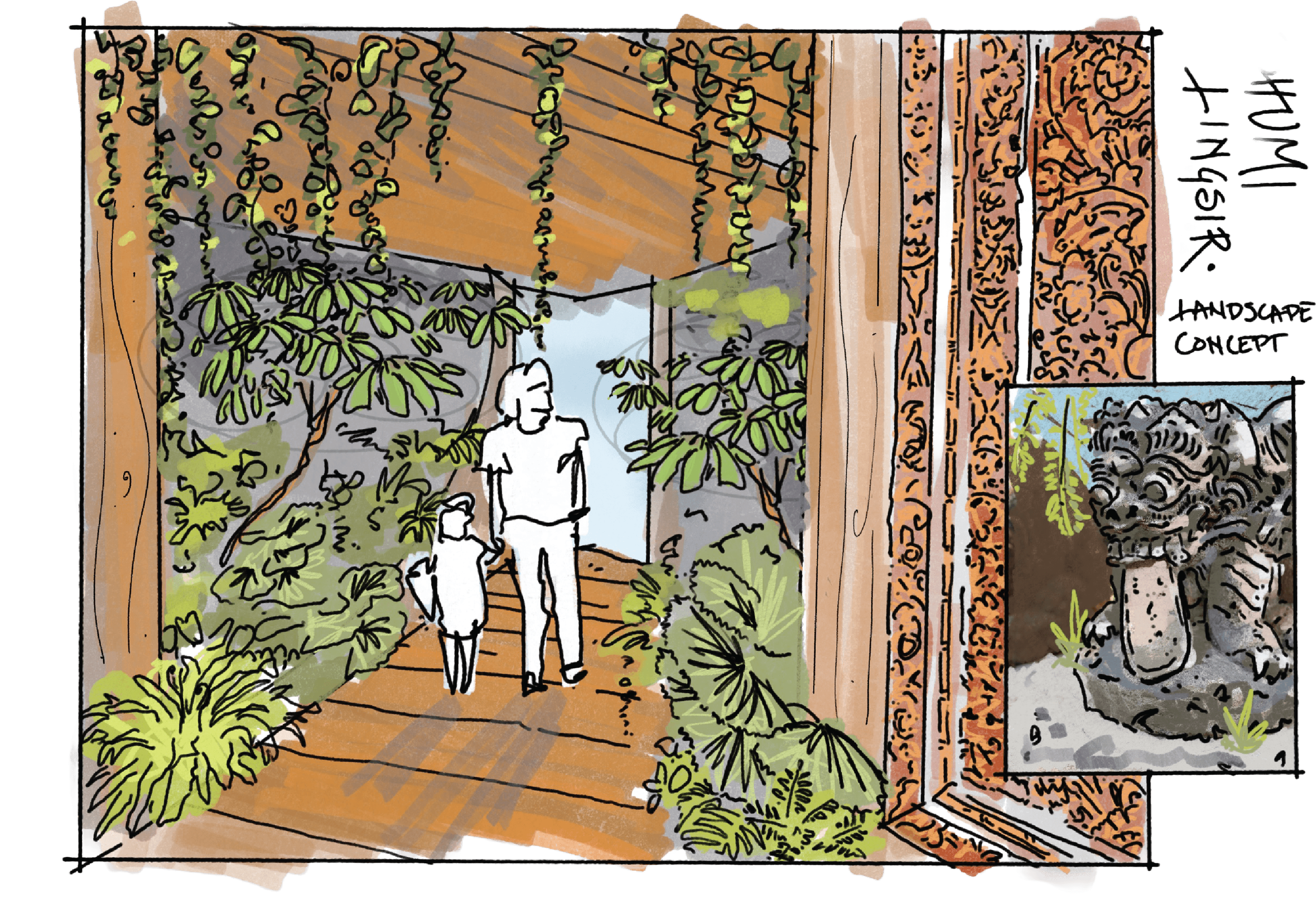


Amid countless possibilities, we often move through a space of uncertainty shaped by our experiences, hopes, fears, and the circumstances we are facing. What appears to be the right decision today may not hold the same meaning at another time. Bhumi Lingsir invites us to enter a space for reflection on how we understand the decisions we make. Rather than offering answers, the installation presents an experience that encourages us to pause, observe, and listen to ourselves.



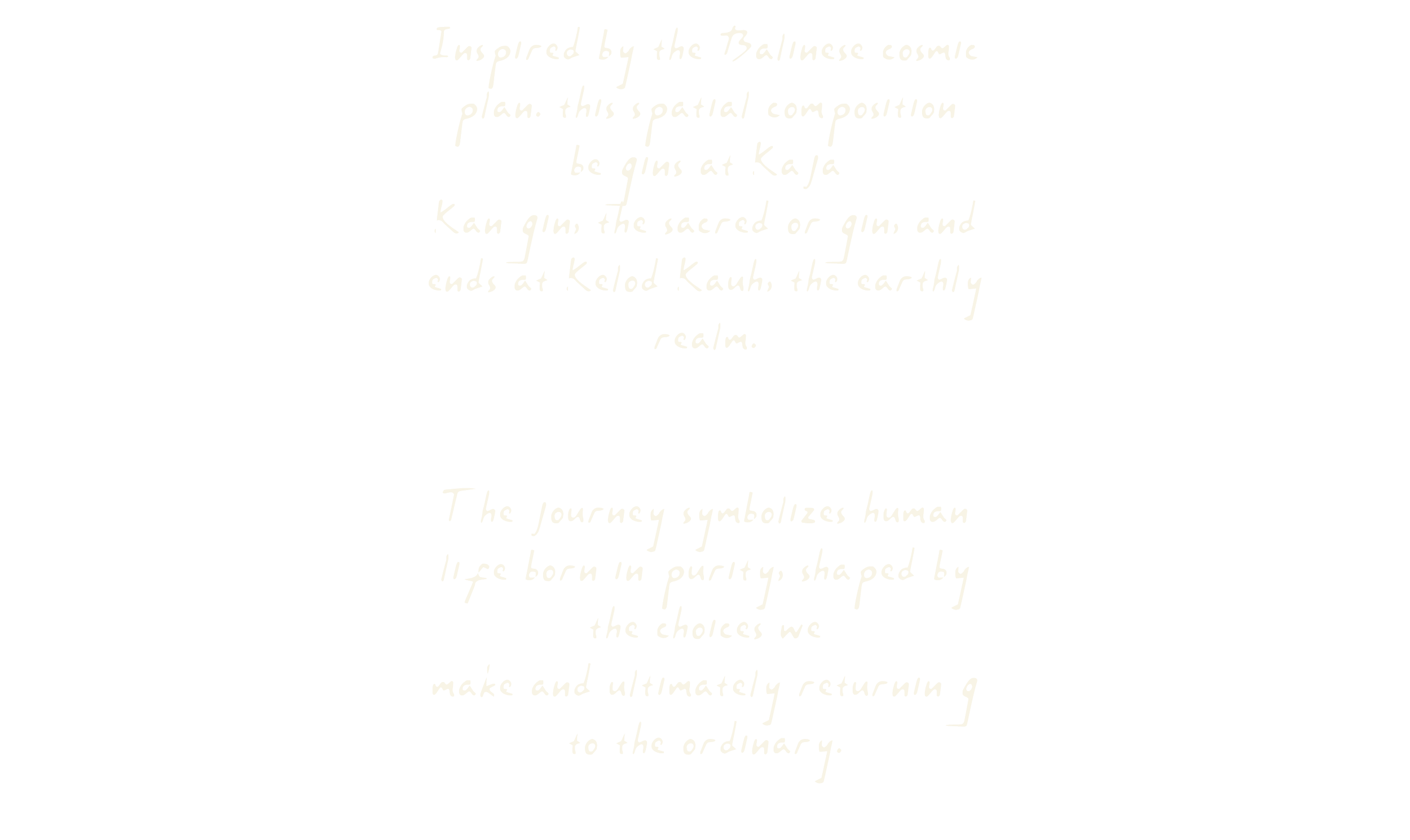
More than simply guiding movement, the installation presents a spatial journey that interprets the relationship between the sacred and the profane, positioning architecture as a medium for reflecting on the connection between people, nature, and the spiritual realm. The design of Bhumi Lingsir is grounded in four fundamental principles of traditional Balinese architecture: Cross Axis, Diagonal Axis, Sanga Mandala, and Catus Patha. Together, these principles establish the installation's orientation, spatial organization, hierarchy, and spatial character. Through the interplay of these four principles, the installation becomes more than a setting for experience. It constructs a spatial journey that embodies philosophical values and invites each visitor to reflect on the relationship between people, nature, and spirituality.
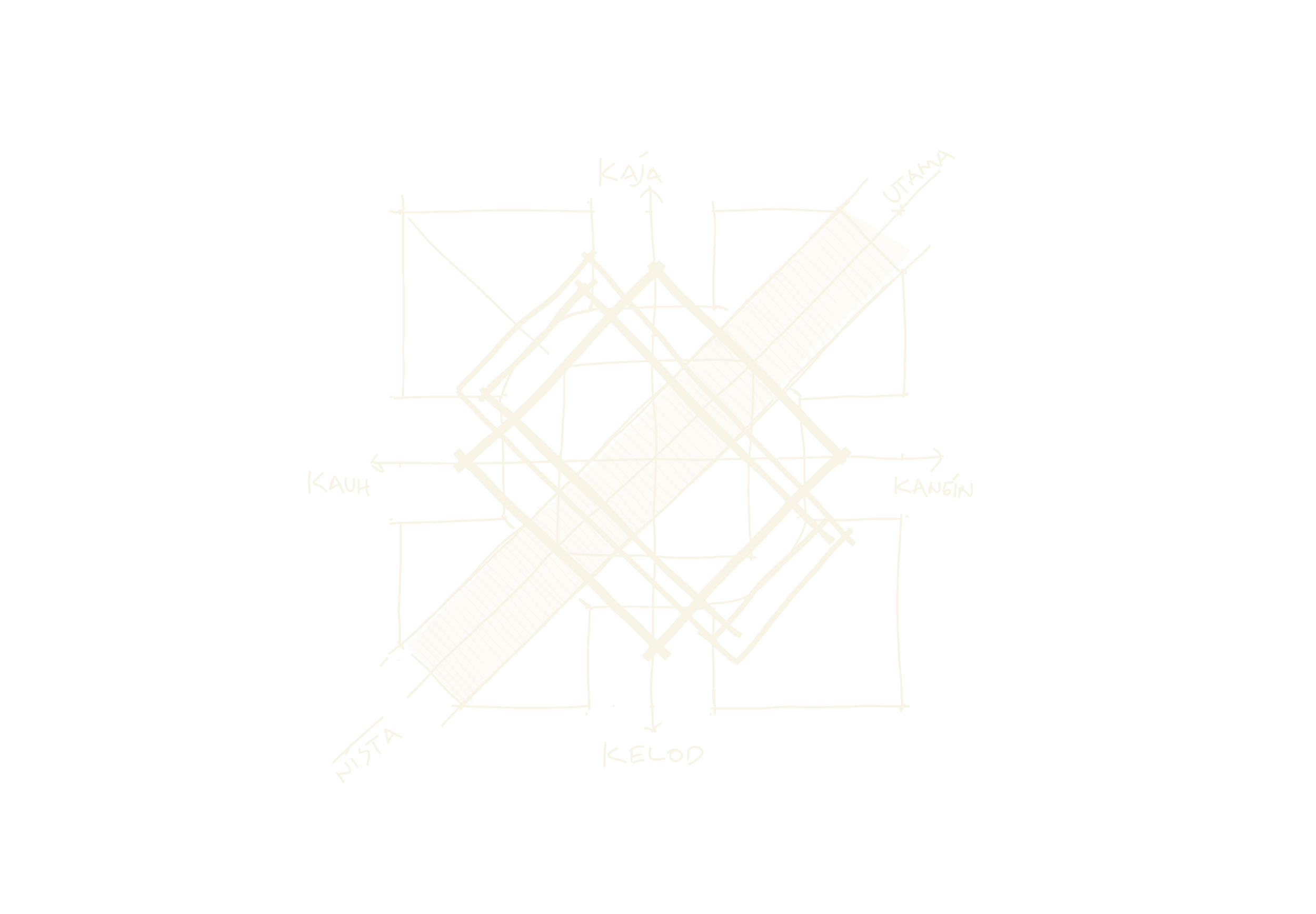
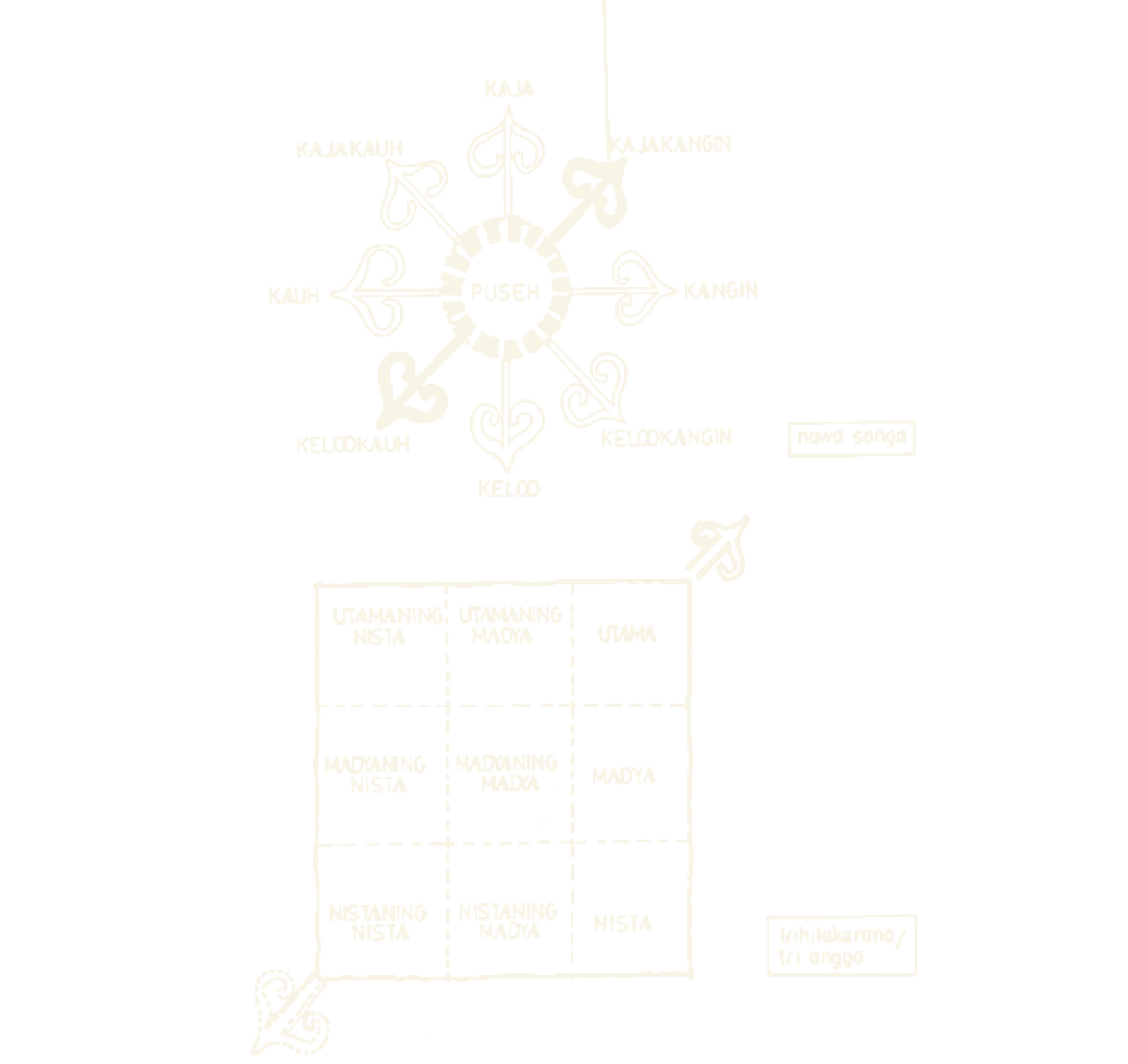
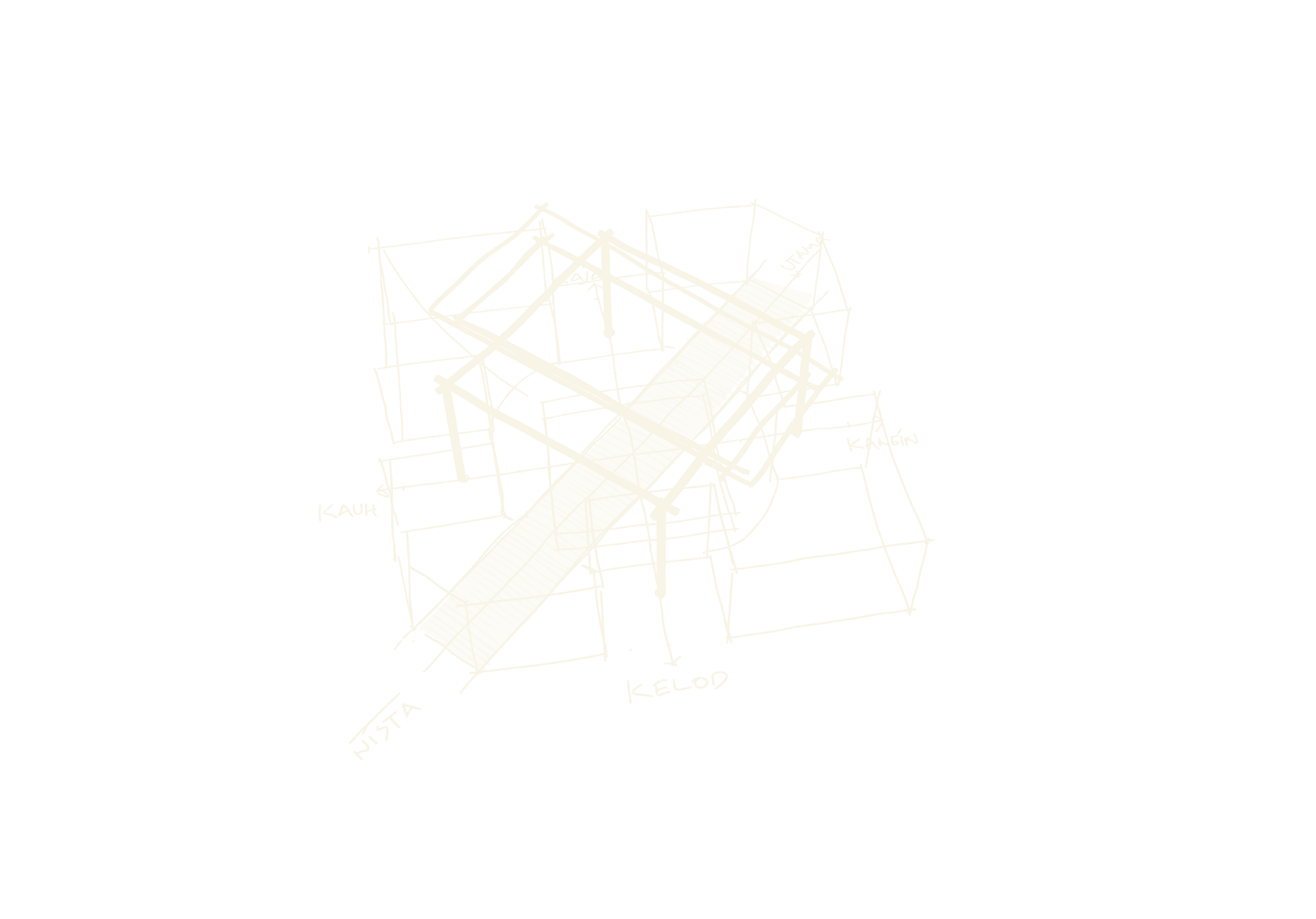

From this idea, Nawangseta, together with Living Designs Bali, interprets the concept through the lens of Biophilic Architecture an approach that re-establishes the relationship between people, space, and nature. Within the installation, nature is not presented as a backdrop, but as a medium for contemplation, inviting visitors to experience a moment of stillness before taking the next step. Water, masks, doors, mirrors, an oasis, the sound of flowing water, and plants become symbols of the many layers that accompany every choice: change, identity, possibility, reflection, and perspective. Together, these elements form a space that invites each visitor to discover the meaning of their own choices.